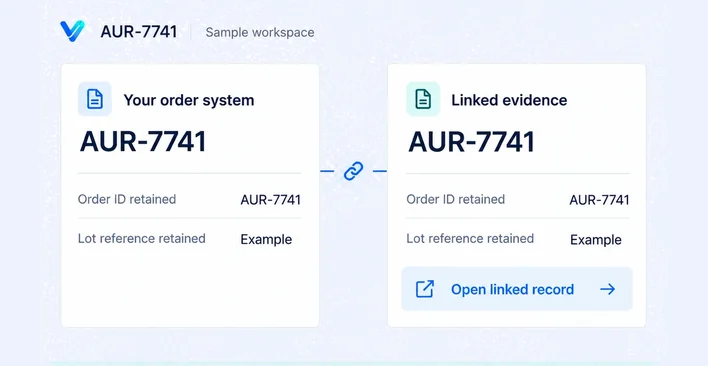
Platforms, consultants, procurement networks, and healthcare operators hand supplier certificates, laboratory reports, and claim questions to Veritura, without becoming the certificate help desk and without certifying anything themselves.
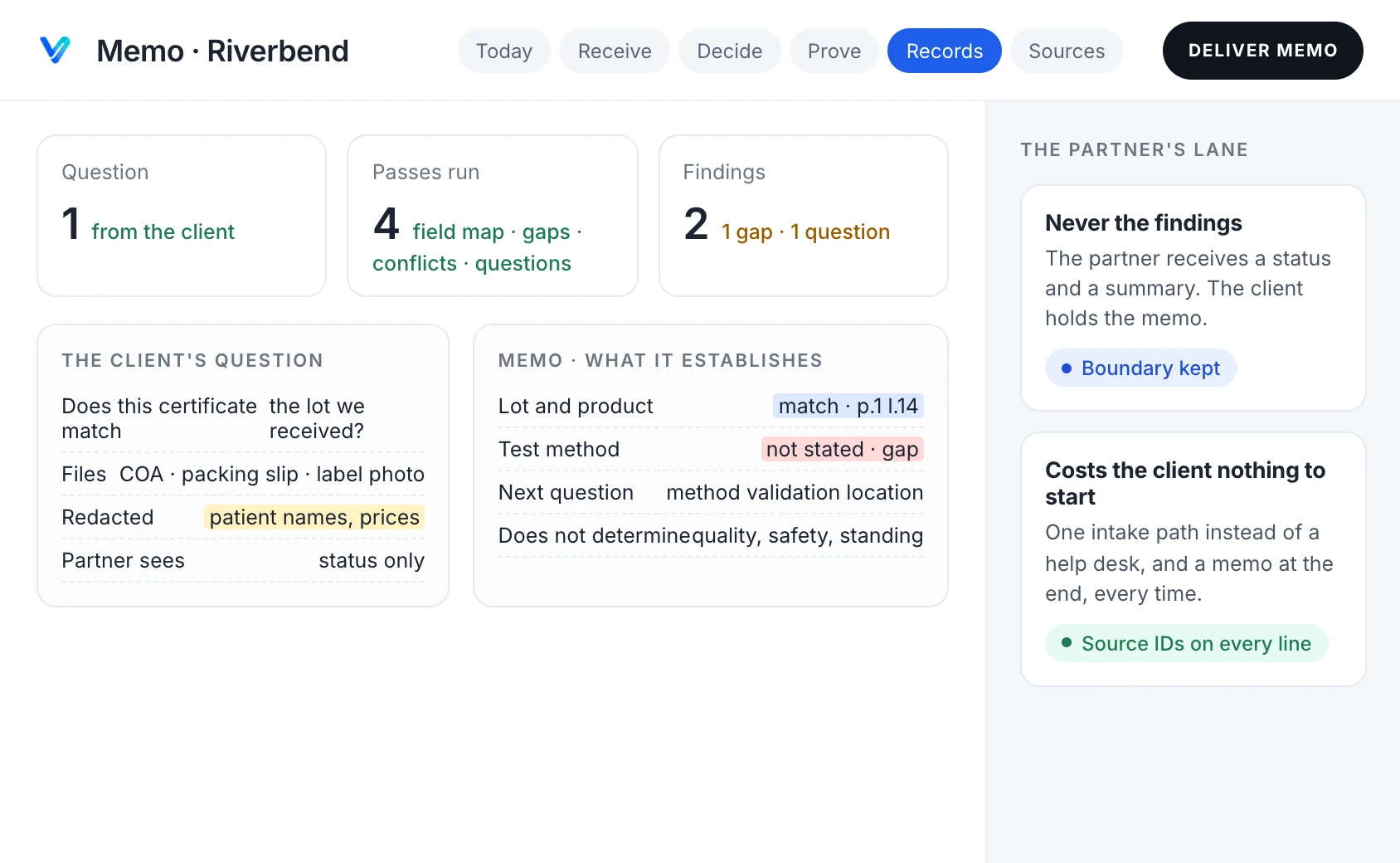
Clients get a specific intake path and a memo format instead of sending loose PDFs and screenshots into your team. Veritura documents what is present, missing, conflicting, or not verified, without ranking vendors or facilitating purchases, and the memo gives your client better supplier follow-up questions before procurement, QA review, or sample testing. You refer the diligence work without becoming the party that grades product quality.
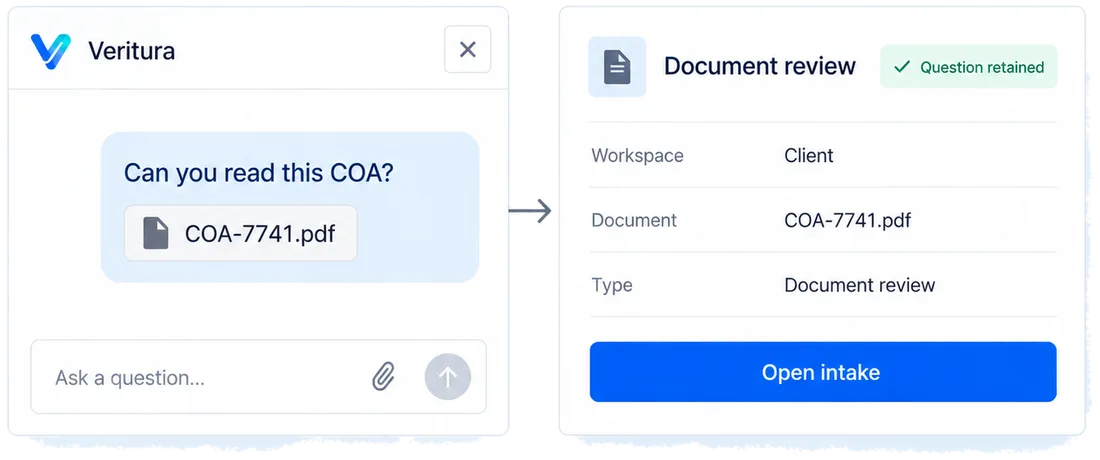
Five stops, and the partner never becomes the party that grades the product.
01
A client has a supplier certificate, an API quote, a laboratory report, or a whole packet that needs structured review, and it lands on your team as loose files and a question you are not set up to answer. Instead of becoming the certificate help desk, you point them at one intake path with a memo at the end of it.
One intake path with a memo at the end is a service your clients can be sent to, which is different from a help desk your team has to staff.

02
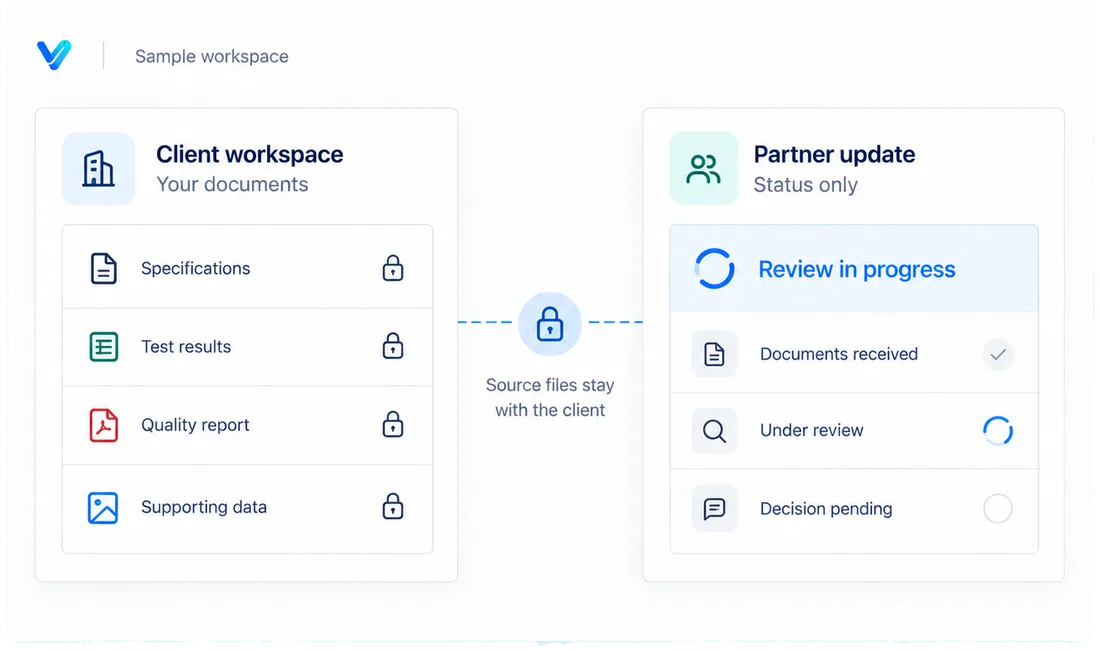
The intake explains what to include, what to redact, and what the memo will not determine, before anything is sent. The client sends their own documents into their own workspace, and the partner never has to hold, forward, or store a client's supplier paperwork to make the referral work.
Stating what the memo will not determine before anything is sent is what protects both the client and the partner from reading it as an approval.

03
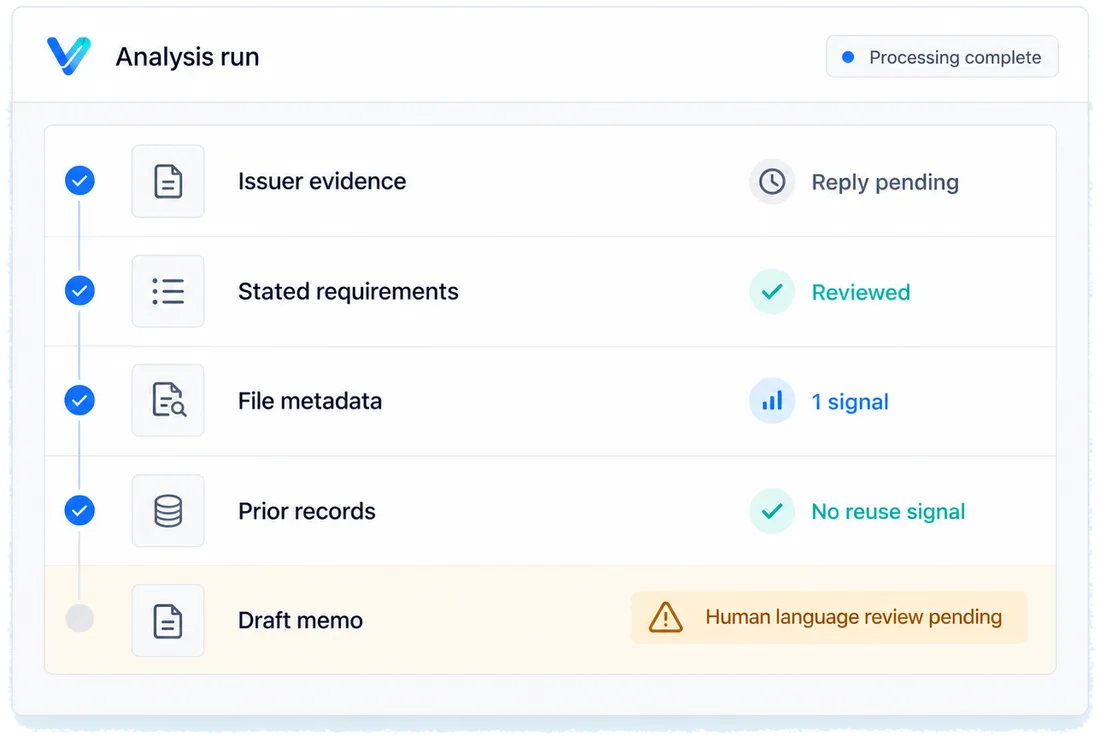
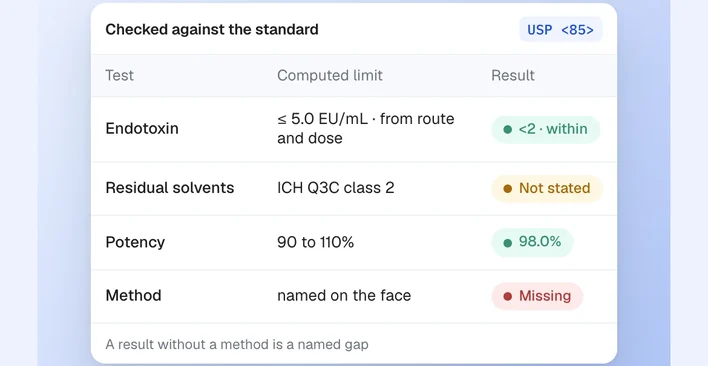
The field map, the gaps, the conflicts, and the supplier follow-up questions are drafted mechanically, by the same passes that run on every packet in Veritura: reconciled against the issuing laboratory, the standard, the file itself, and every other document seen. Diligence memos then get a person's check of the final language.
The same four passes that run on every packet in Veritura run on the client's documents, so the memo is built by the method, not by a consultant's afternoon.

04
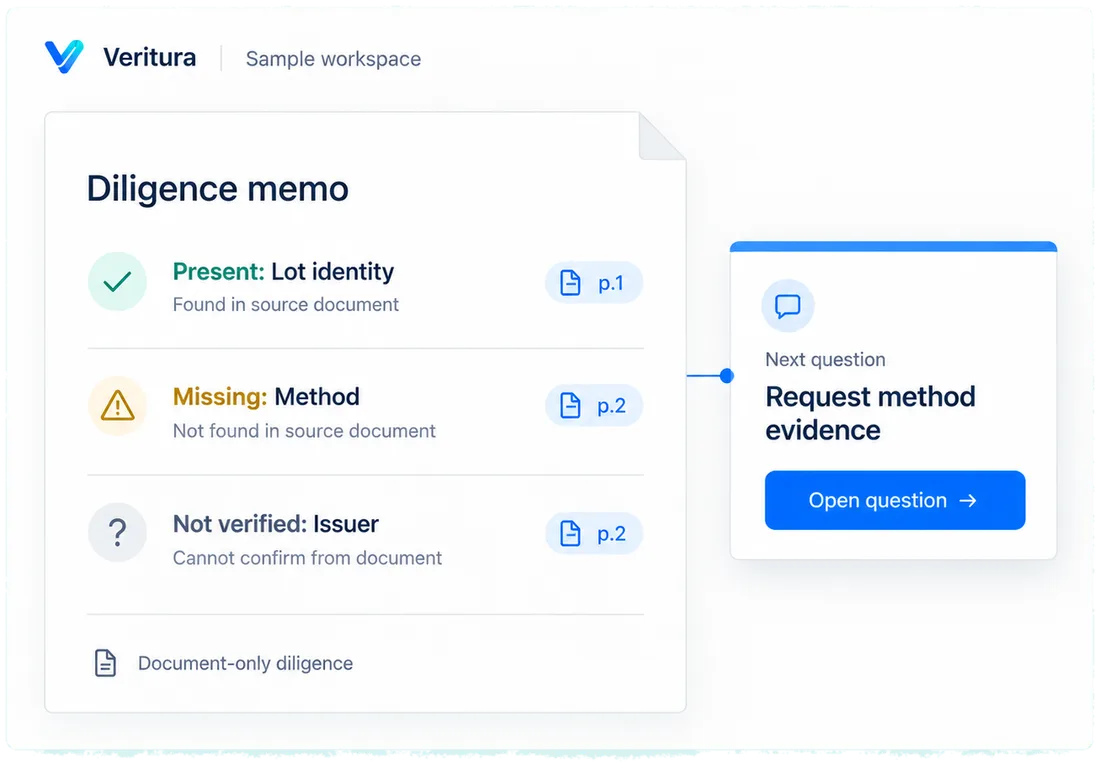
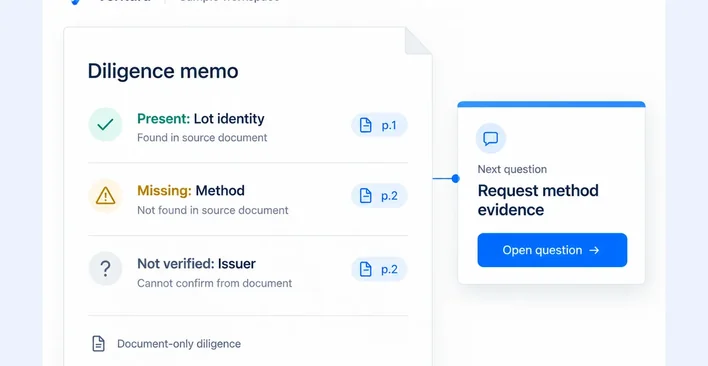
The client receives a document-only diligence memo with source IDs, limitations, and the next questions to put to the supplier. It says what is present, missing, conflicting, or not verified, and it says on its face what it does not determine, so nobody downstream mistakes it for an approval or a ranking.
Source IDs, limitations, and next questions on every memo make it something a client can act on with their supplier, and something a downstream reviewer can trust.

05
On request, the partner receives a status or a summary, never responsibility for the finding. A referral costs a client nothing to start, the memo shows the format better than any pitch, and your operating boundary stays exactly where it was: you referred the diligence, you did not perform it.
A status or a summary on request, never the finding, is what keeps the partner's operating boundary exactly where it was before the referral.

What changes
One intake path and a memo at the end, instead of a help desk your team staffs.
You refer the diligence; you never become the party grading product quality.
The memo shows the format better than any pitch.
Four kinds of partner send the first one.
Supplier paperwork creates support burden and diligence ambiguity before client decisions.
Clients need document organisation before deeper regulatory or laboratory work.
Member teams need one consistent way to preserve packet observations and questions.
Teams want documentation clarity from upstream suppliers without building a desk for it.
A referral costs a client nothing to start, and the memo shows the format better than any pitch. Tell us who you would send.
The complete text, for the reader who wants the whole story before a call.
Clients get a specific intake path and a memo format instead of sending loose PDFs and screenshots into your team.
Veritura documents what is present, missing, conflicting, or not verified, without ranking vendors or facilitating purchases.
The memo gives clients better supplier follow-up questions before procurement, QA review, or sample testing.
Refer the diligence work without becoming the party that certifies product quality, legality, or safety.
A client has a supplier COA, API quote, lab report, or packet that needs structured review.
The intake explains what to include, what to redact, and what the memo will not determine.
The field map, gaps, conflicts, and supplier follow-up questions are drafted mechanically.
The client receives a document-only diligence memo with source IDs, limitations, and next questions.
On request, the partner receives a status or a summary, never responsibility for the finding.
Built for these teams
Supplier paperwork creates support burden and diligence ambiguity before client decisions.
Clients need document organization before deeper legal, regulatory, or lab work.
Member teams need one consistent way to preserve packet observations and questions.
Teams want documentation clarity from upstream suppliers without building a desk for it.
A referral costs a client nothing to start, and the memo shows the format better than any pitch.
Veritura reads and connects the paperwork behind an order. It never tests, grades, or endorses the medicine itself, and it never releases anything on its own.

Point the client at one intake path. The partner never holds, forwards, or stores a client's supplier paperwork, and never becomes the party that grades product quality.
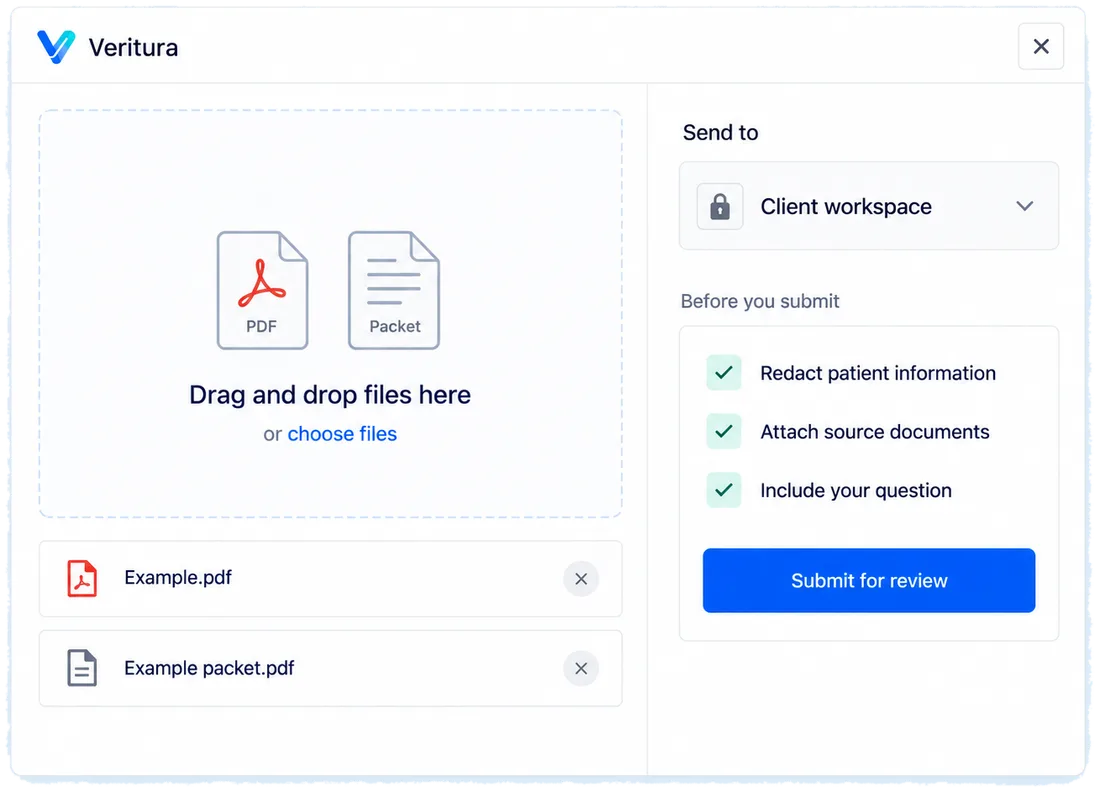
A document-only diligence memo with source IDs, limitations, and the next questions to put to the supplier, stating on its face what it does not determine.
A referral costs a client nothing to start. The memo shows the format better than any pitch.
Still have questions? Talk to a person.