 Veritura
How documents arrive
The paperwork was never the problem. The inbox was.
You email the supplier, wait, and a PDF lands without the endotoxin panel. An inbox cannot know what is missing. Your record can, so it asks for it by name. The pictures are a sample pharmacy's workspace; its suppliers and lots are invented.
One standing link, and a checklist that builds itself.
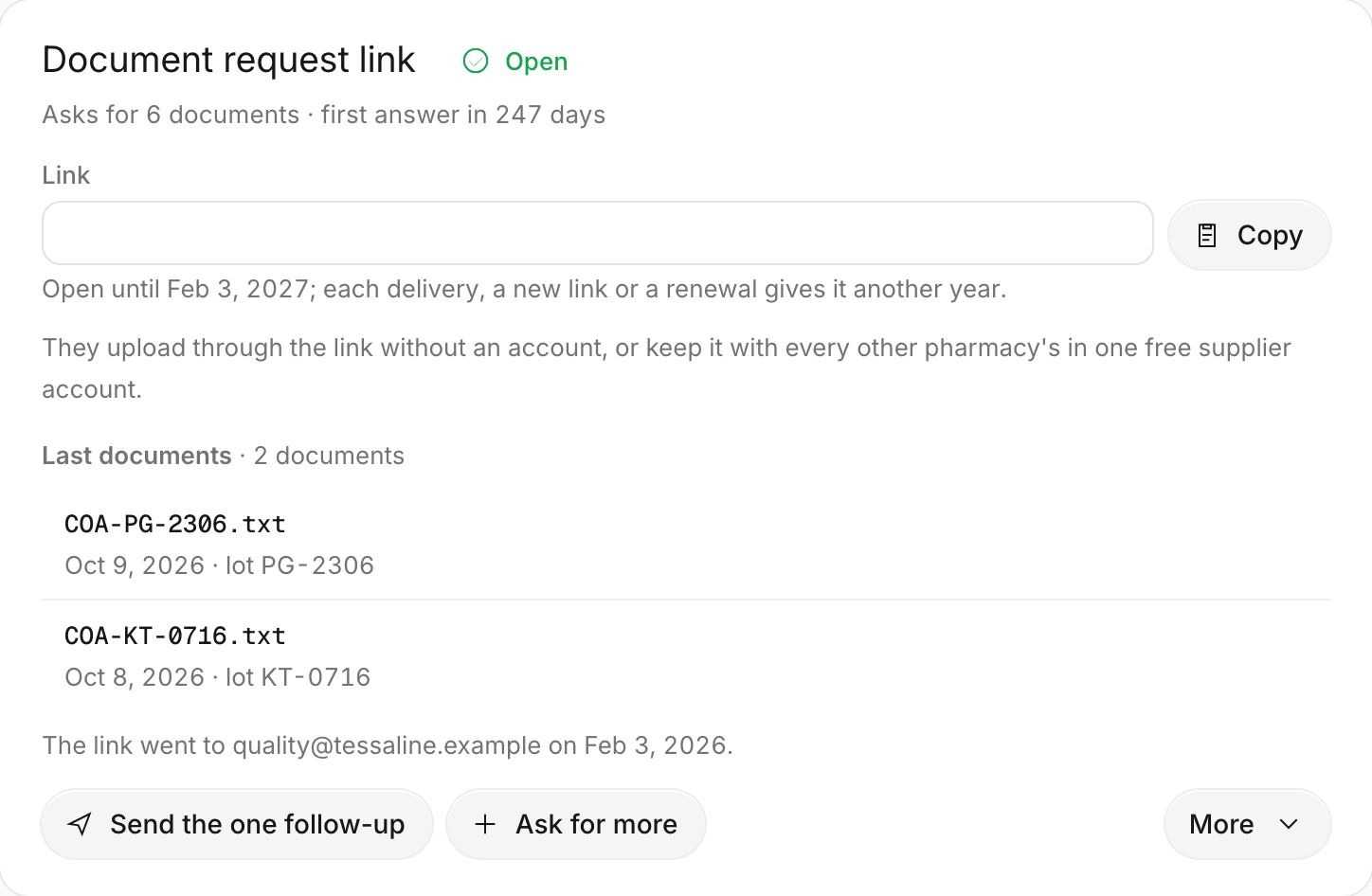
Name the supplier and the checklist of what you are owed comes from your own lots and its qualification file: named documents, named results, named lots. Add the supplier's email and Veritura sends the link for you.
- Open for a year at a time; each delivery or renewal gives it another year
- The last documents that came through it, with their lots
- One follow-up, then a person
However it arrives, it lands on its lot.
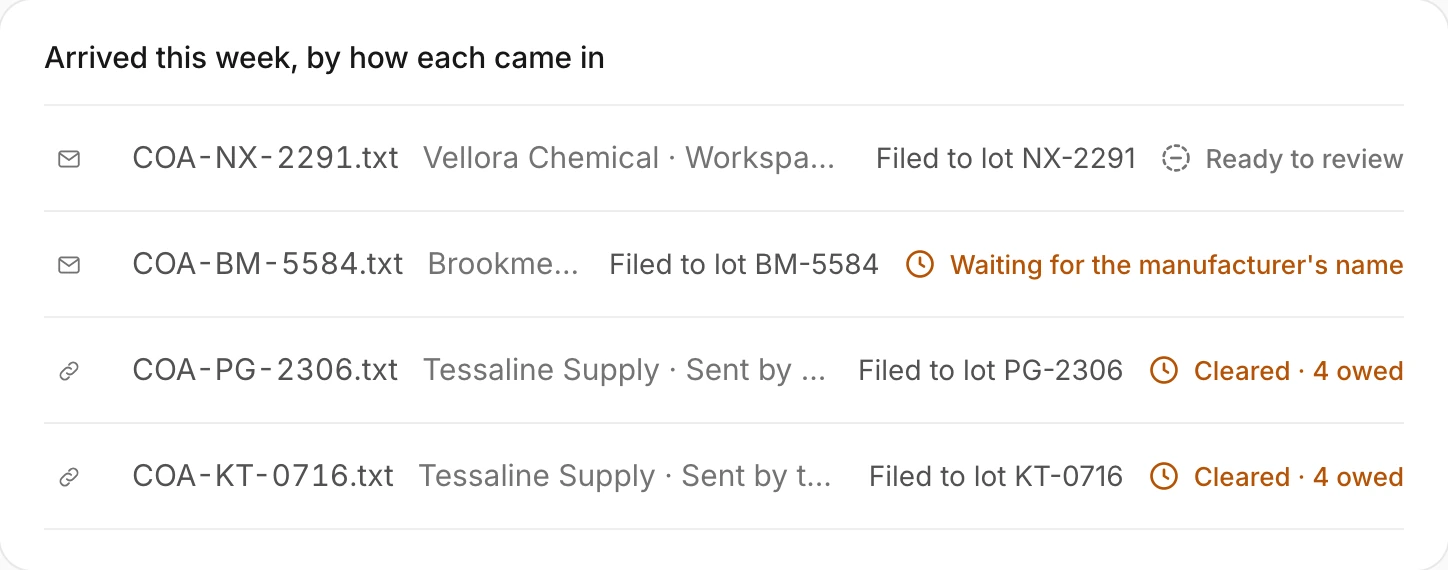
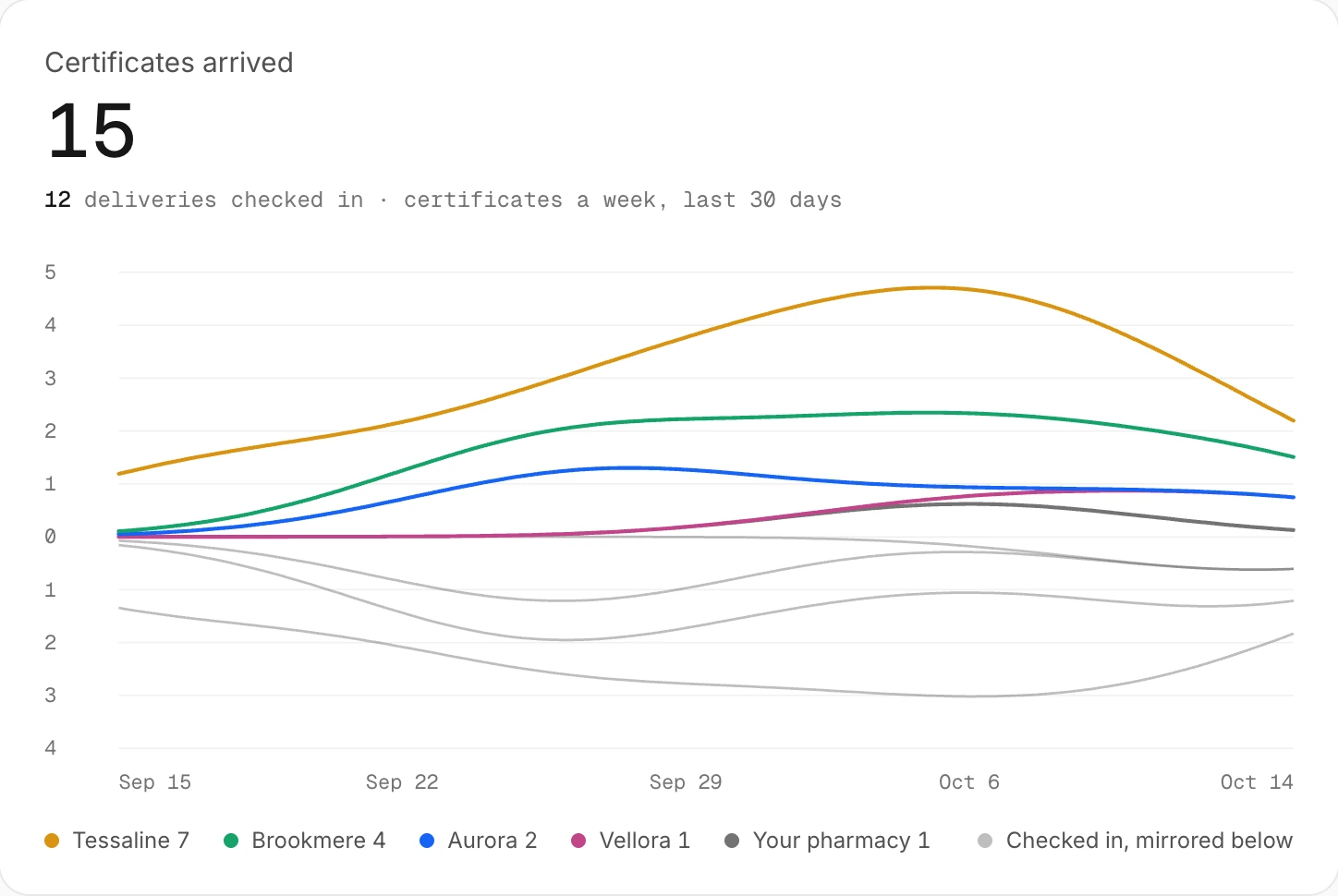
A COA can come through the supplier's link, by email to your workspace's own address, as a dropped set, fetched by lot number from a supplier's public library, or through the API. Each one is kept as received, with its fingerprint.
- The same file sent twice is recognised, not filed twice
- The record says how each document came in
- A document that cannot be matched waits for a person
Reviewed like any upload.
Every document that comes in goes through the same named checks as any other, up to twenty, and the lot's review runs again. An email tells you the supplier, the files and what was settled, and the evidence is one click from the delivery.
- Fields, results, lot identity and document-integrity signals
- Items close on the supplier's screen and in your workspace at once
- The original is kept, and a reply is added beside it
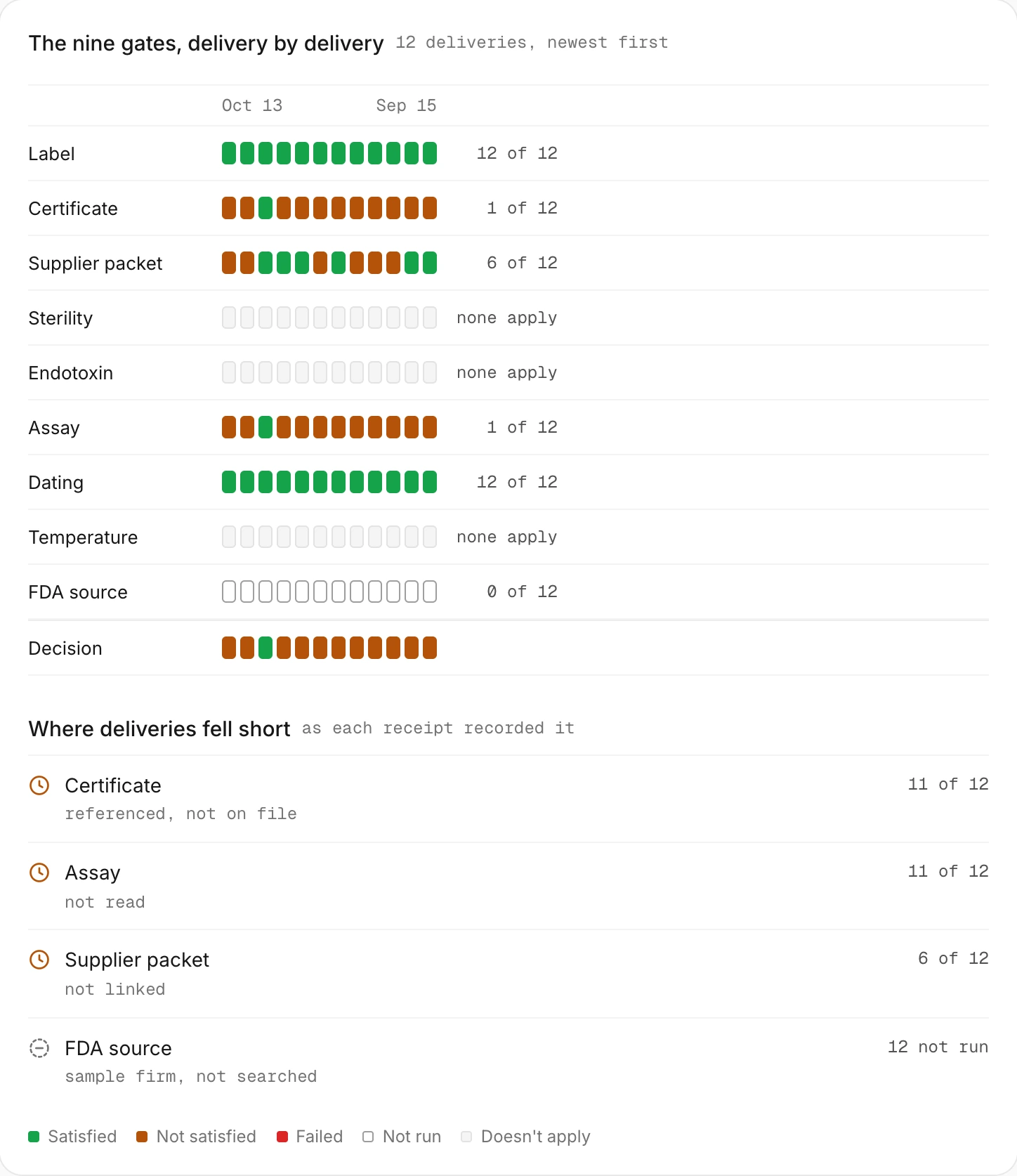
Receiving, gate by gate.
The COAs are often reviewed before the box arrives. On receiving day, every lot goes through nine receiving gates, and the receiving log counts where each delivery fell short.
- The label against the paperwork, and the COA for that exact lot
- The supplier packet, sterility, endotoxin, assay and dating
- Temperature evidence and a screen of the FDA's sources. A gate that does not apply is not counted
Five ways in. One record they all land on.
However a document comes, it is identified by its bytes, kept as received, reviewed the same way and filed to its lot.
- Drop a whole setEach file reviewed and filed on its own line
- Your workspace's addressMail to it files under that workspace
- A supplier's standing linkNo account, no login, no cost
- A lot-number fetchFrom a supplier's public COA library
- The APIPost to /v1/check for the same review
- What is refusedWord, Excel, SVG, HTML and empty files, with the reason
What the supplier sees
The pharmacy is owed judgment. The supplier is owed facts.
The supplier sees what arrived and what is still owed. Its own document is never scored back at it.
A document that trips a check is held for your review. The supplier is never told which check.
Four days of silence earns one reminder. A person sends it, or Vera does if you chose Act. After that, a phone call.
A supplier can keep every pharmacy's link in one free supplier account.
Where the documents go next.
Questions about supplier document collection.
What does it cost the supplier?
Nothing. No account, no login, no invoice. They drag files onto their page or email the link's own address, and each send shows them what is still owed.
How does a document find its lot?
It is reviewed the same way as everything else and bound only to the exact lot it describes. Matching is conservative on purpose. A document that cannot be matched waits for a person.
What do I see when something arrives?
An email naming the supplier, the files and what was settled. The document files itself to its lot, the review runs again, and the evidence is one click from the delivery.
Which files are accepted?
PDF, PNG, JPEG, WebP and plain text, up to 8 MB. Word and Excel files, SVG, HTML and empty files are refused, and the refusal says why.
Does a document that arrives through the link count for more?
No. How a document arrived is a fact about its delivery, never about whether it is true. It goes through the same review as any other document.