 Veritura
How the record works
Partners ask the same questions. The record answers with dates.
Each insurer, platform and payer asks in its own form. The pictures are Brennick Compounding, a sample pharmacy, and Northway Health, a sample telehealth platform reading a partner's shared record. Their names and figures are invented.
Every line says how it was established.
The record is organized in seven sections, from identity to ingredients, lots and shipping. Each line shows the date its source answered, or the date the pharmacy recorded or signed it, and when it goes due again.
- Current, to check, differs or not on file, on every line
- The documents partners ask for are entered once, where they belong, and read by the record from there
- Public sources such as NPPES, the FDA and the HHS OIG list are looked up on a weekly schedule
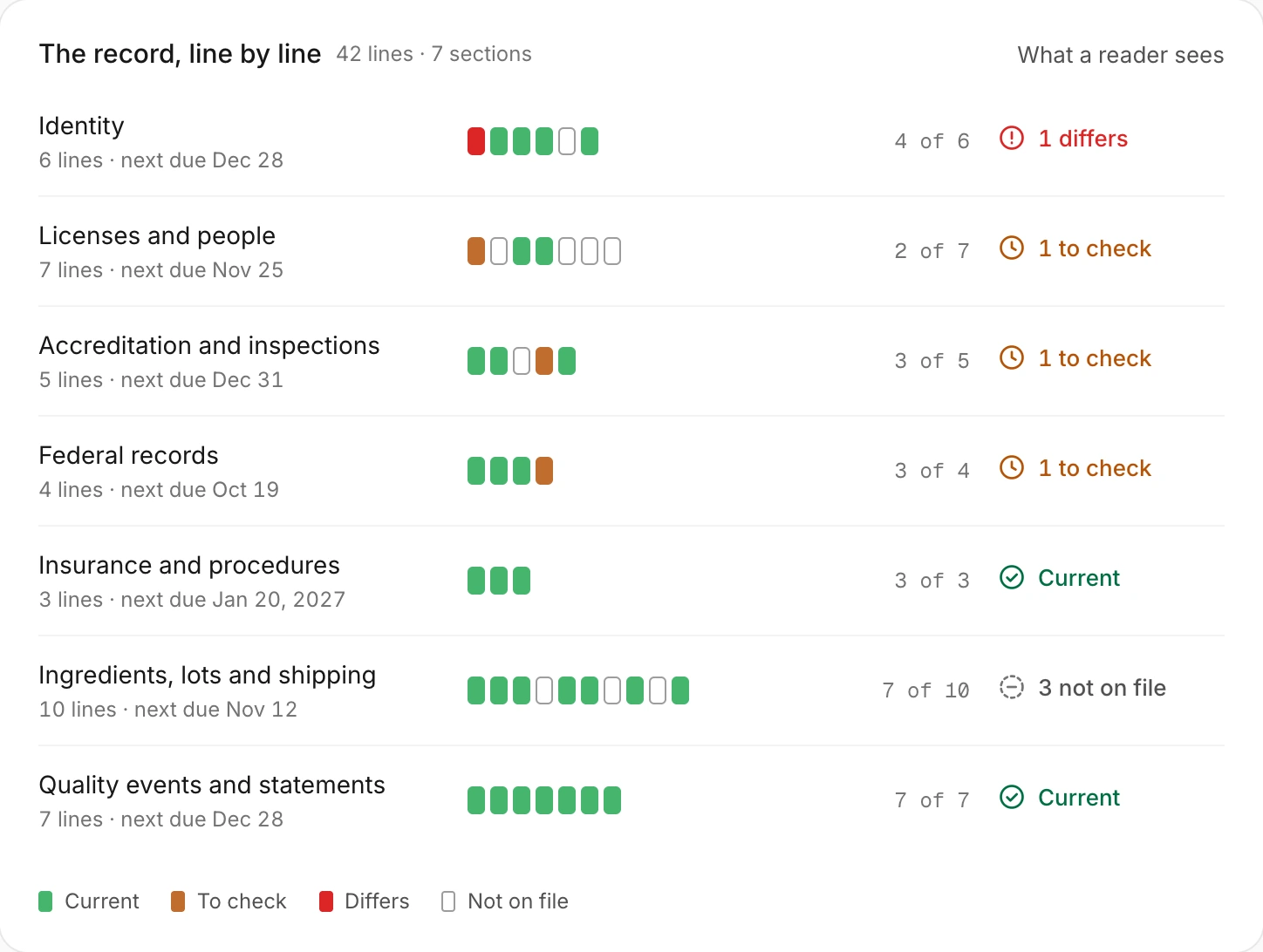
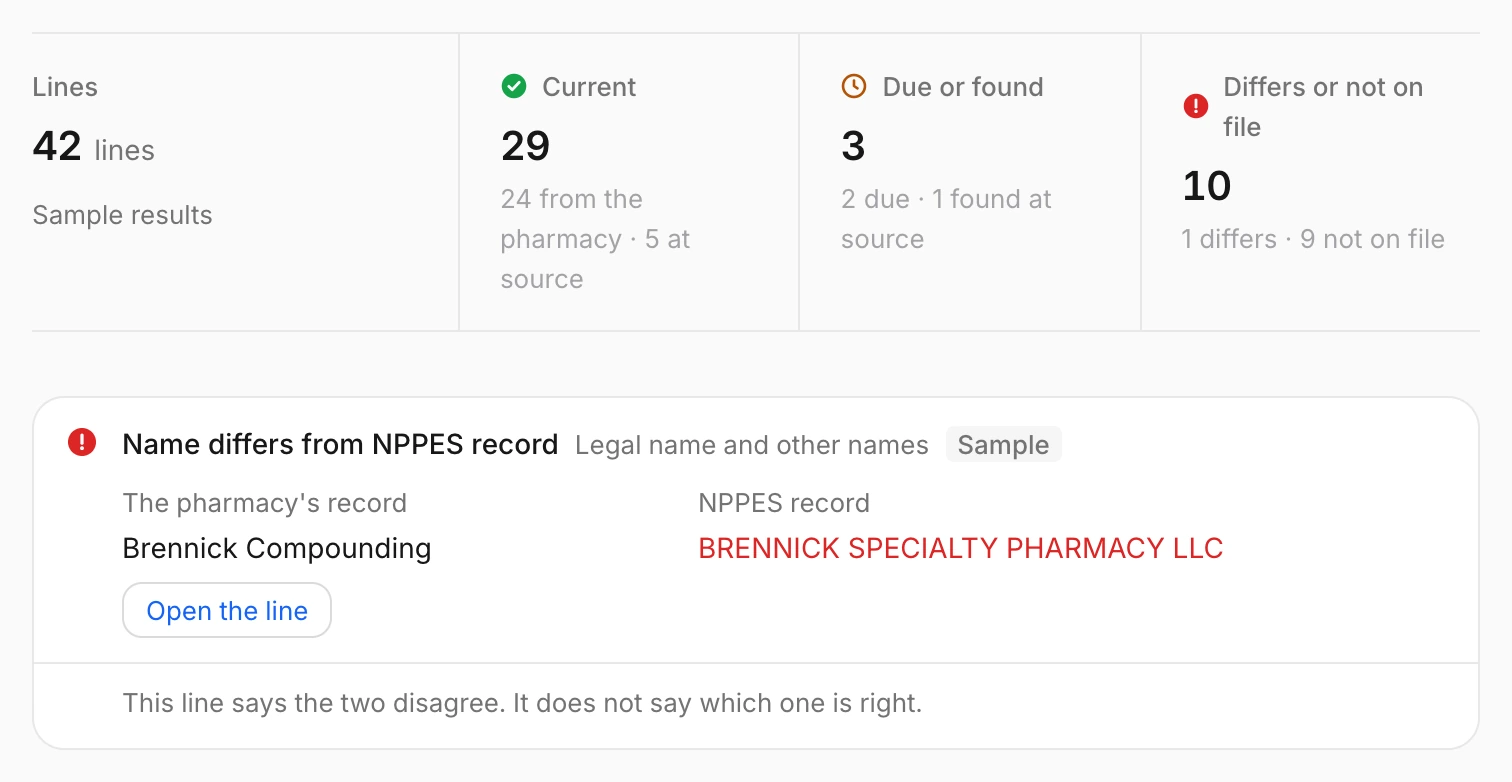
A line that differs says so.
When the pharmacy's record and a public source disagree, the line shows both values side by side. It says the two disagree. It does not say which one is right.
- Current, due or found, and differs or not on file, counted above every form
- A finding at a source, such as a recall in openFDA enforcement reports, waits for review
- Items not on file are named, so the pharmacy knows what to add
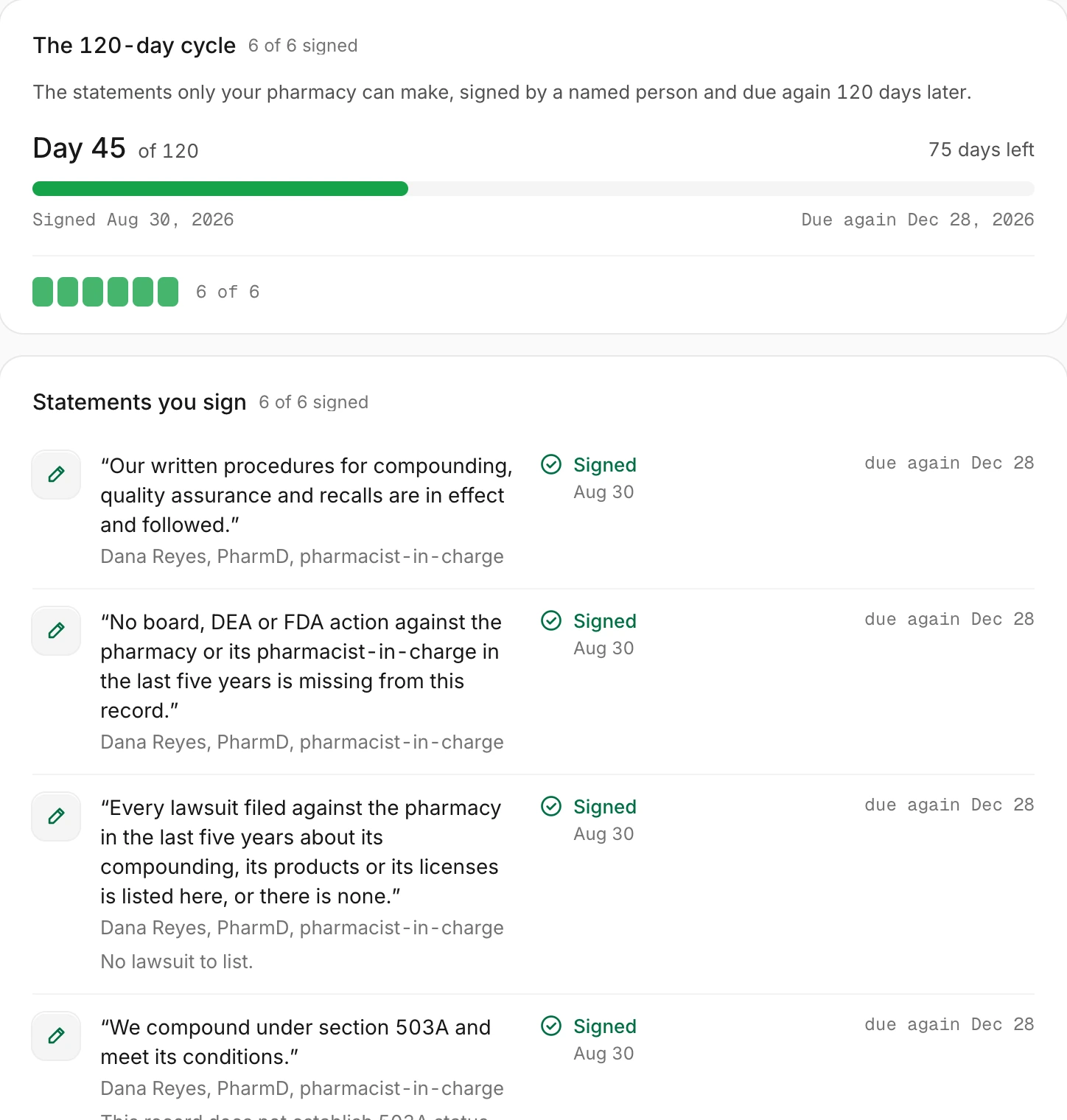
Statements only the pharmacy can make.
Six statements, from written procedures in effect to a certificate of analysis on file for every bulk ingredient lot used in the last 12 months. The pharmacist in charge signs them, and they are due again 120 days later.
- Each statement is a line of the record, seen with its date
- Until they are signed again, every open link shows them as due
- The 503A statement says plainly that the record does not establish 503A status
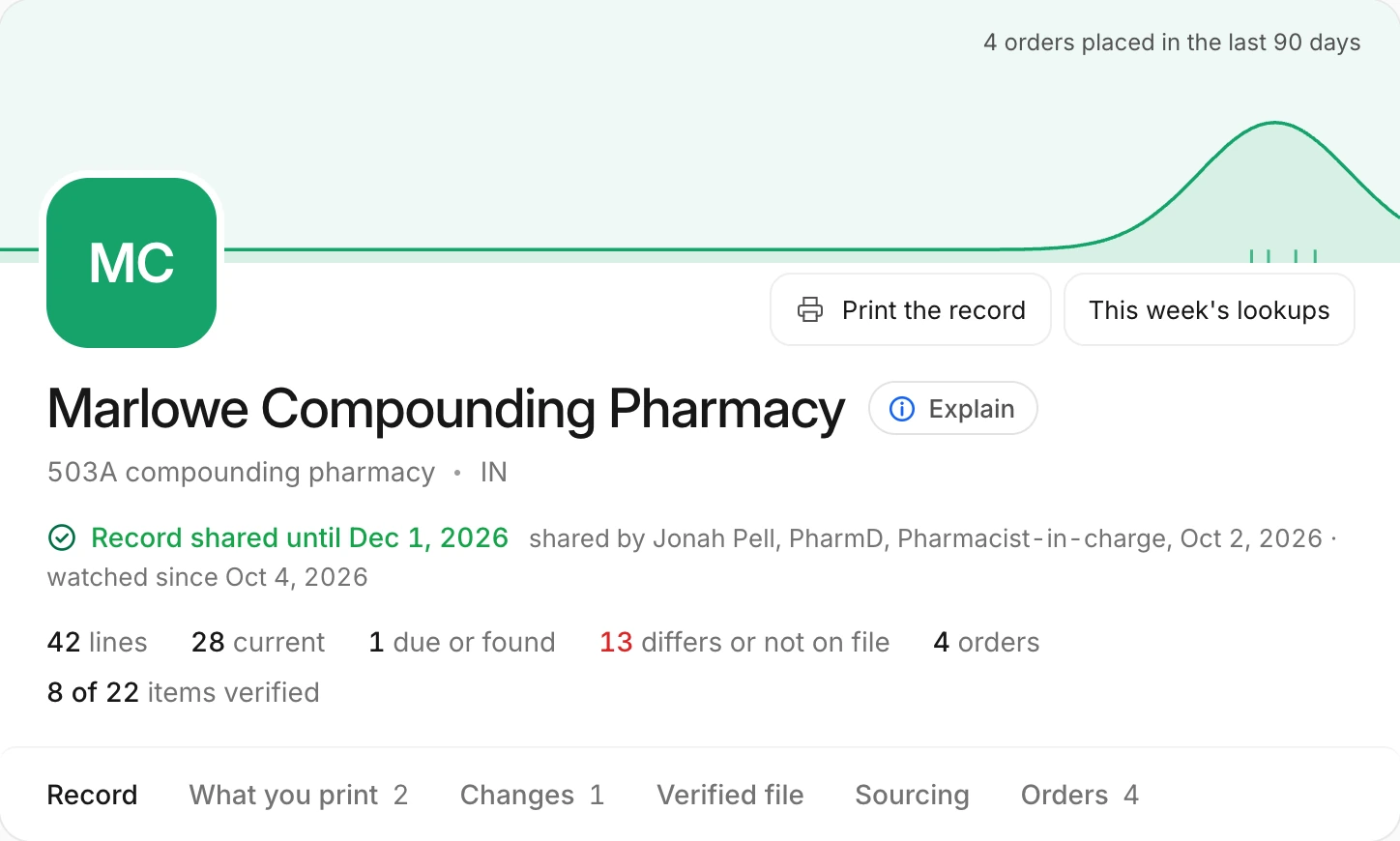
Shared by a link, opened on the partner's side.
Each link names who it is for, answers one form and closes on the date you choose. The platform sees who shared the record and until when, how its lines stand, and watches it from then on.
- Five forms, from the full record to an insurer's checklist, a telehealth partner's diligence list and a payer's audit
- A closed link stops at once, and shows as closed
- A partner's questionnaire is answered from the record, and a person reviews every answer before it is exported
Where the record stops
We review documents. We do not test material.
The record shows documents and public records. A laboratory tests the medicine, and your pharmacist decides.
The record says nothing about any medicine. Veritura does not vouch for a pharmacy or rank one.
It says the pharmacy's record and the source disagree, never which one is right.
A source that does not answer keeps its last date. A line due for a re-check has not been checked since the date it shows.
Where the record goes next.
Every partner pharmacy held to the same items, its public records looked up again every week.
Supplier qualificationThe same discipline facing your suppliers: a dated file for each one and a decision a named person signs.
Evidence PassportOne signed traceability record per order, opened by the patient or the clinic with no account.
Questions about the Partner Record.
Who can open our Partner Record?
Only the readers you create a link for. Each link names who it is for and closes on the date you choose, and a closed link stops at once. Nothing is shared until you create one.
Does Veritura vouch for our pharmacy?
No. The record is not a certification or a rating, and it says nothing about any medicine. It shows each line with how it was established and its date. What a partner does with it is the partner's decision.
Can it answer a partner's questionnaire?
Paste a partner's questions, or drop its spreadsheet or PDF. Each answer is proposed from the record with the field it came from, and a person reviews every one before it is exported. Nothing is sent by Veritura.
What happens when a line or a statement goes due?
A line due for a re-check shows the date it was last checked, and says it is due. Statements are due again 120 days after they are signed, and until they are signed again every open link shows them as due.